Chiapas 2018
Oaxaca was fascinating but Chiapas, especially San Cristobal de las Casas, was even more intensely alive. Our visit was greatly enhanced by a previously arranged meeting with Carlota Duarte, American born photographer and nun in the Society of the Sacred Heart whose father came from the Yucatan peninsula and who founded The Chiapas Photography Project (CPP) in 1992 to give this and future generations of Maya a means of self-expression. Carlota’s sharing of her intimate knowledge of the Maya culture gave us insights and information that greatly enriched our visit. More information about the inspiring work of the CPP at the end of this blog.

Flying to Chiapas which, at about 7200 feet, is about 2000 feet higher than where we live.

As soon as we landed the tour company took us to a high speed boat ride in the impressive Sumidero Canyon.
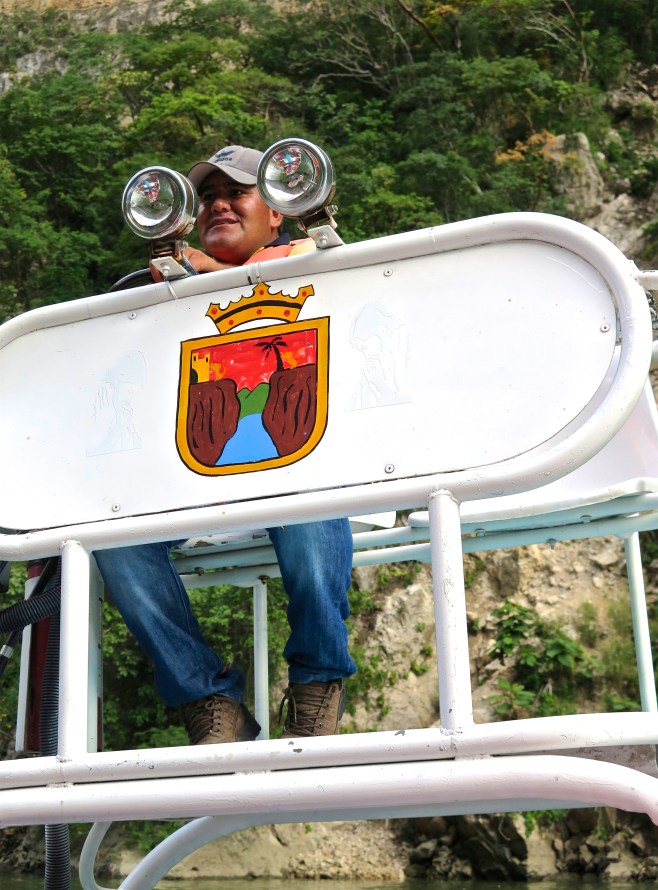
Our captain piloting his 300 horsepower craft.
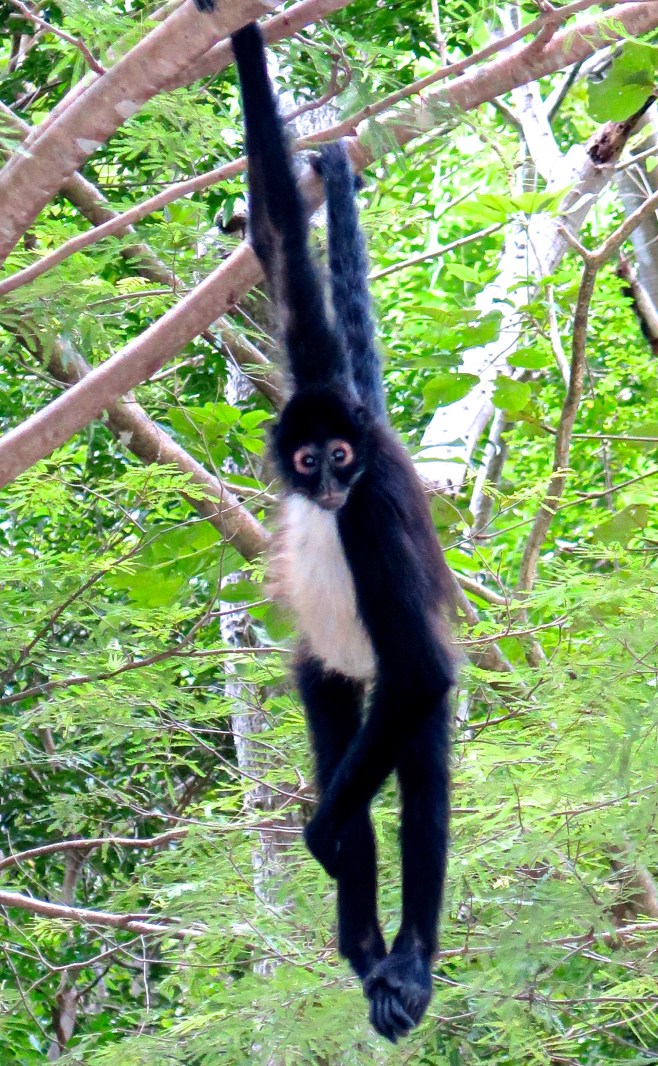
Sitings in the cliffs above included playful spider monkeys and…
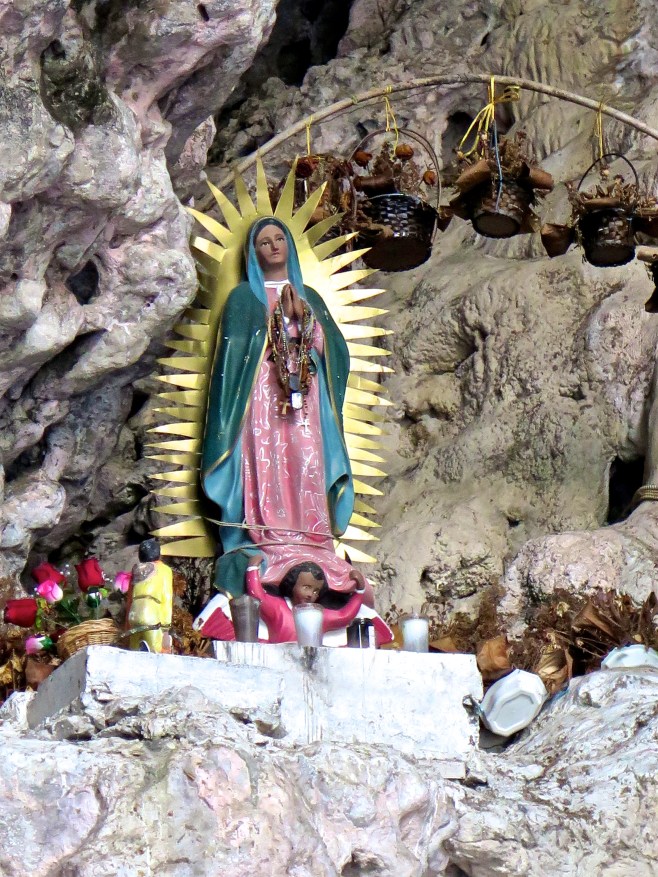
a shrine dedicated to the beloved Virgin of Guadalupe…
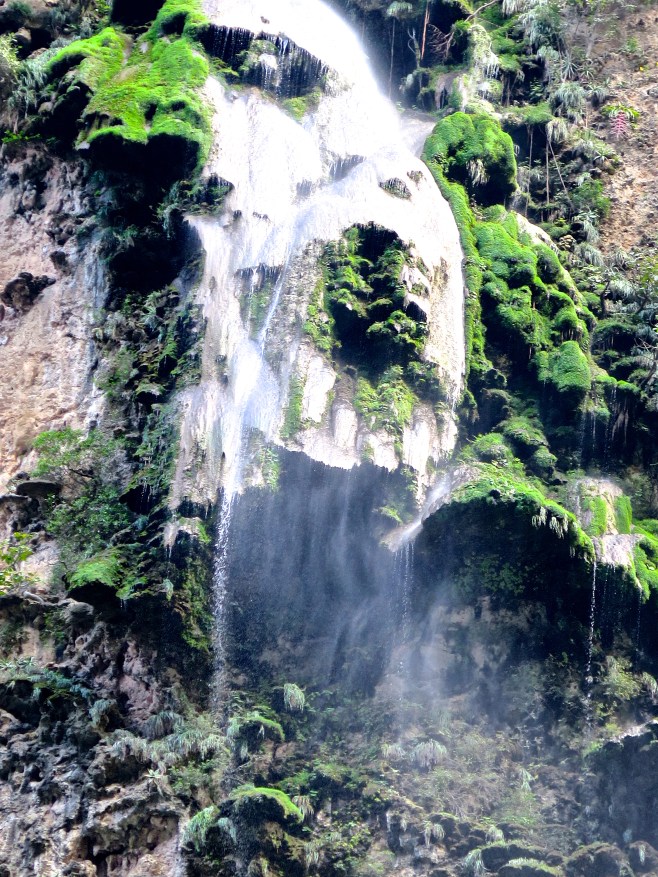
and curious combinations of vegetation and minerals.
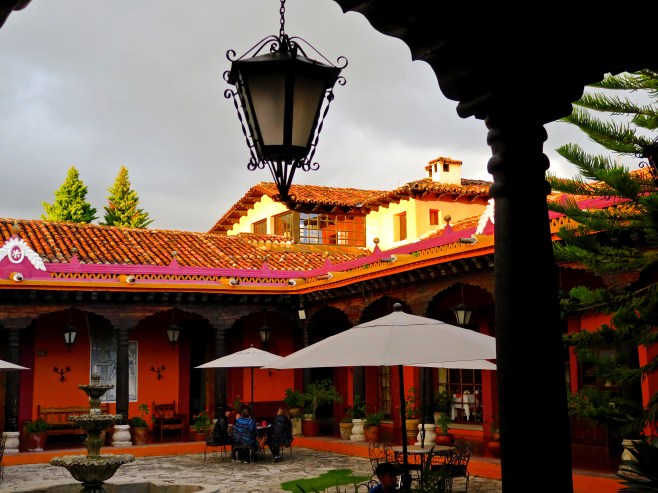
Late afternoon at our hotel which was coveniently located near the cathedral & plaza.
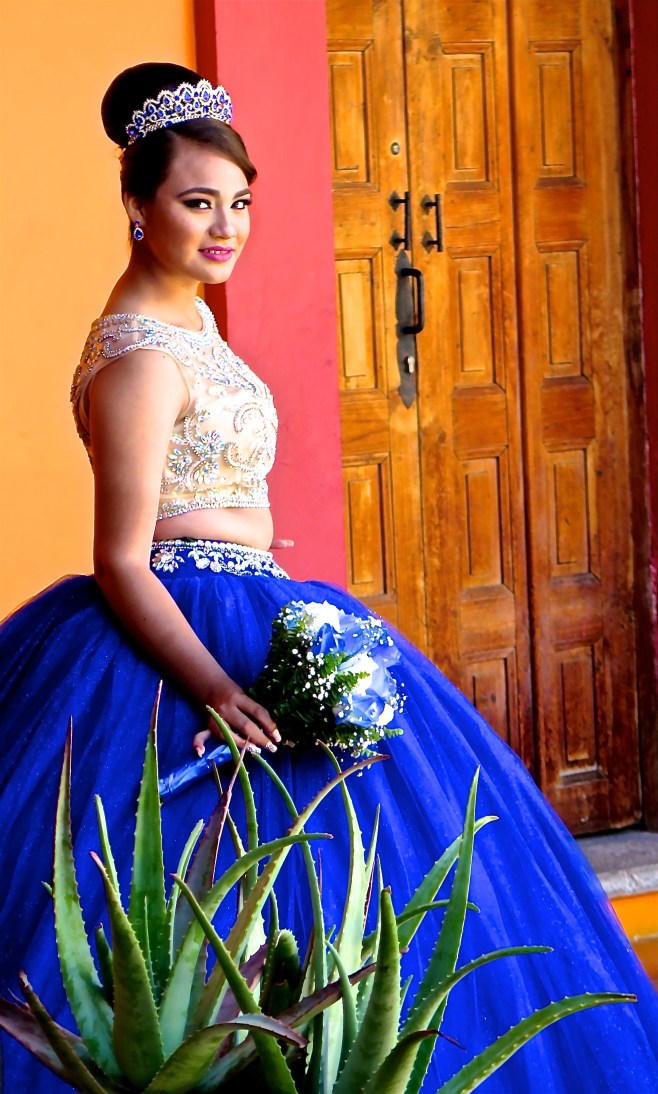
This young woman was having photos taken for her 15th birthday celebration (quinsienera).

The cathedral, badly damaged in the earthquake in 2017.
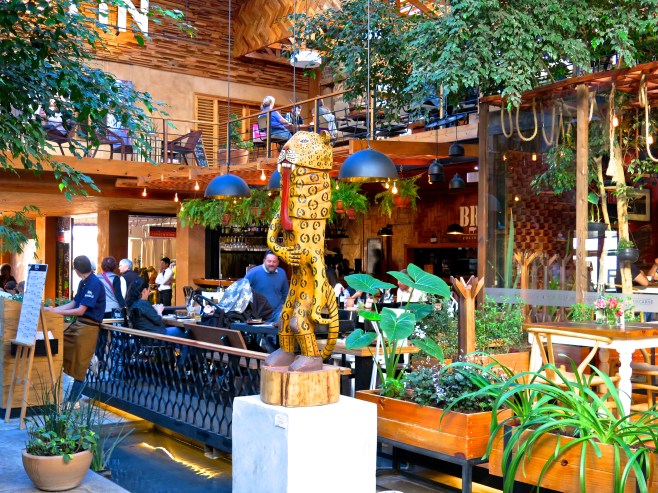
The San Agustin food court offers a variety of excellent venues for breakfast, lunch & dinner.
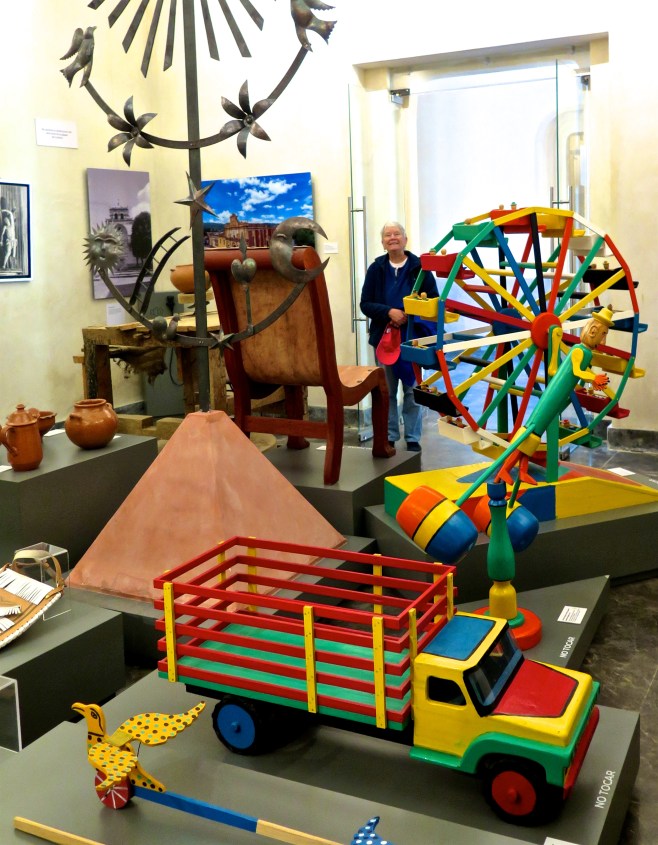
A museum collection of wonderful local artisanship…

some of it threatening to take Barbara to the Underworld!
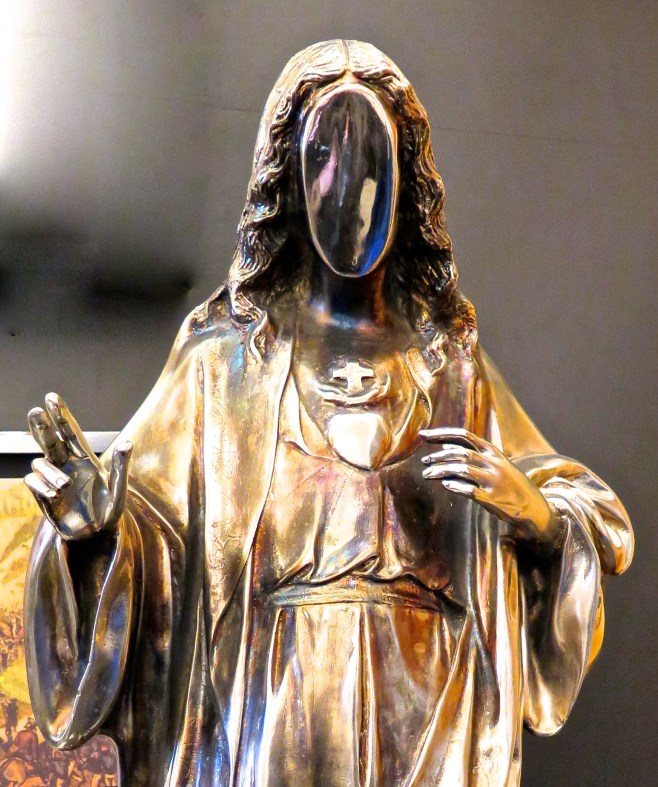
A thought-provoking depiction of Jesus in whose face you see your own.
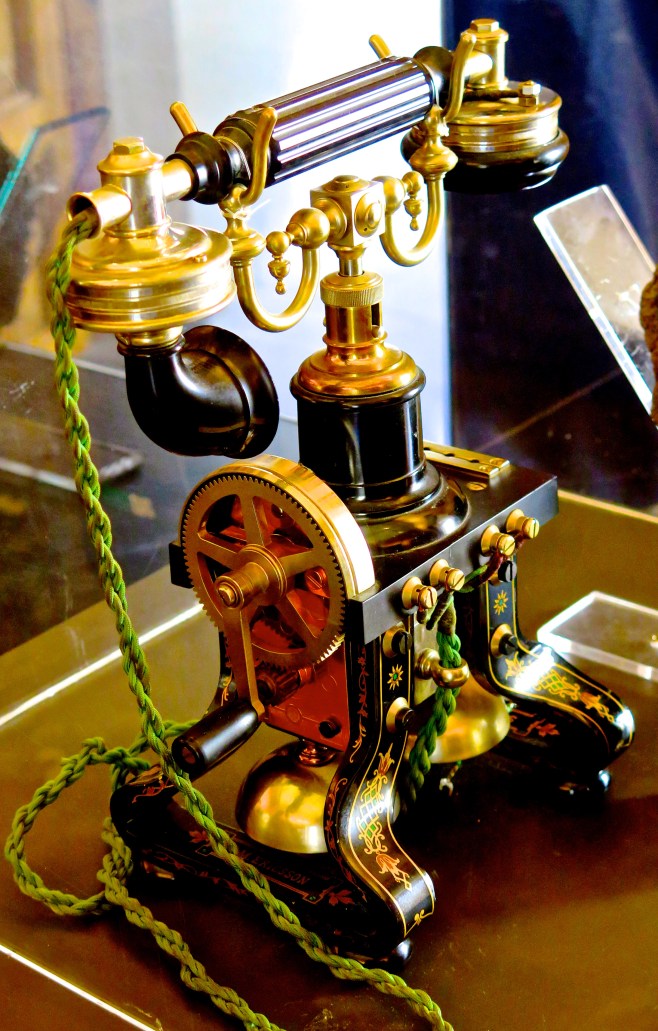
A very elegant version of the earlier Internet with a crank to supply current.

This striking ceramic mural in relief portrays the rise (hopefully) of humankind.
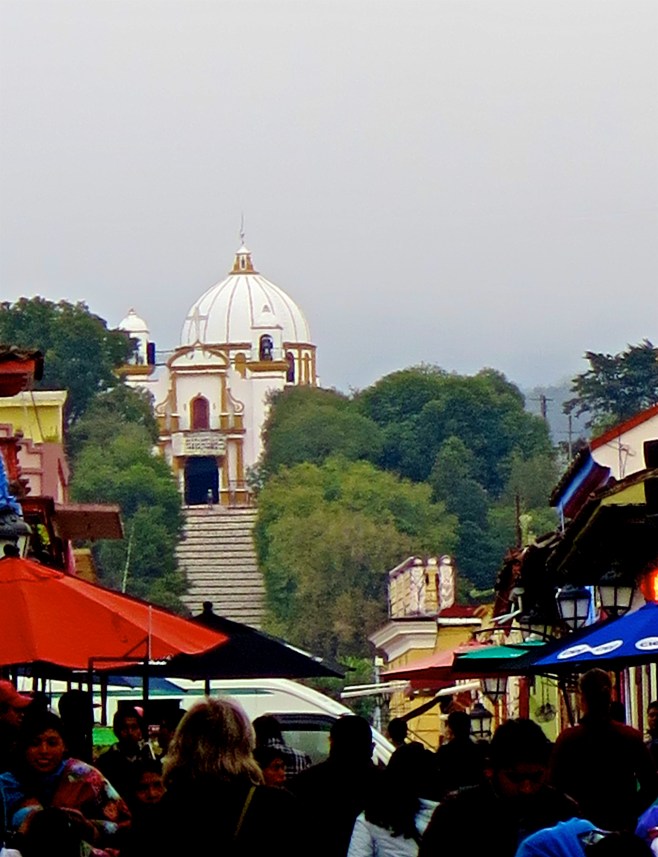
The center of San Cristobal is beautiful and bustling day and night.


Intricate carving on this ancient church which is surrounded by market stalls.
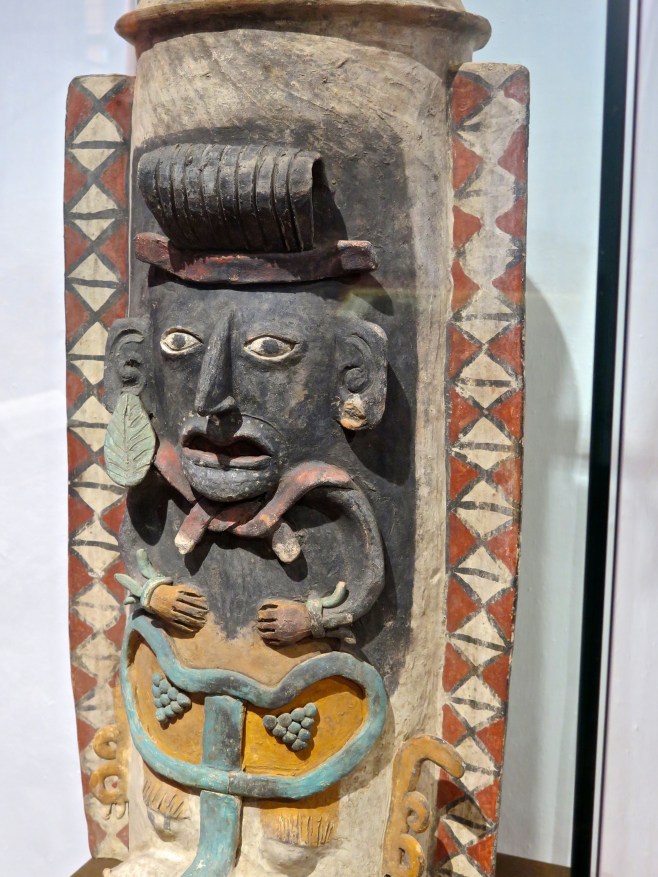
We were confronted by mysterious and enigmatic symbolism at every turn. The following photos were taken in the Textile Museum which is one of the major attractions in San Cristobal.

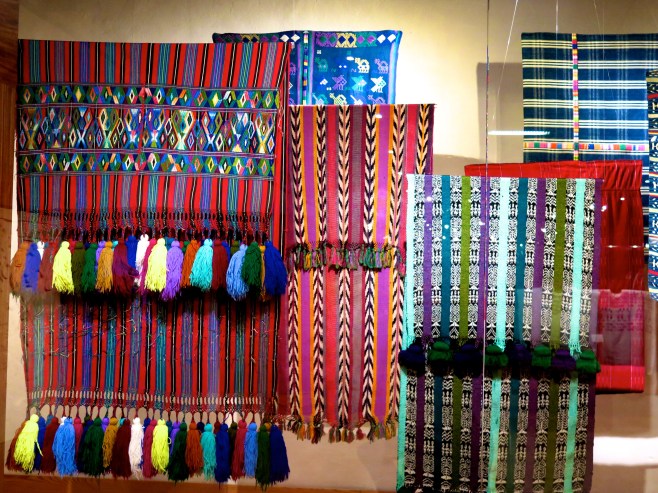

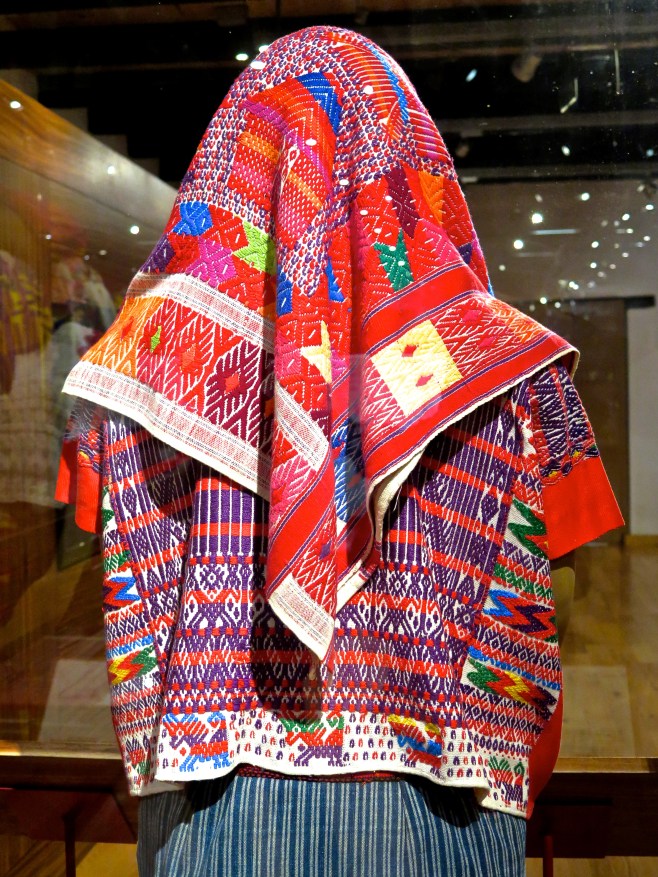

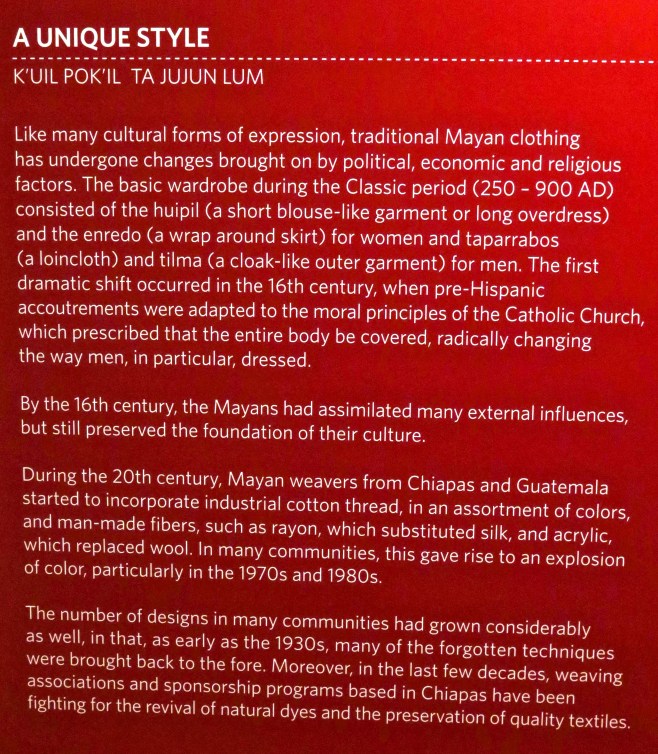


The Jaguar figures heavily in local legend and myth.
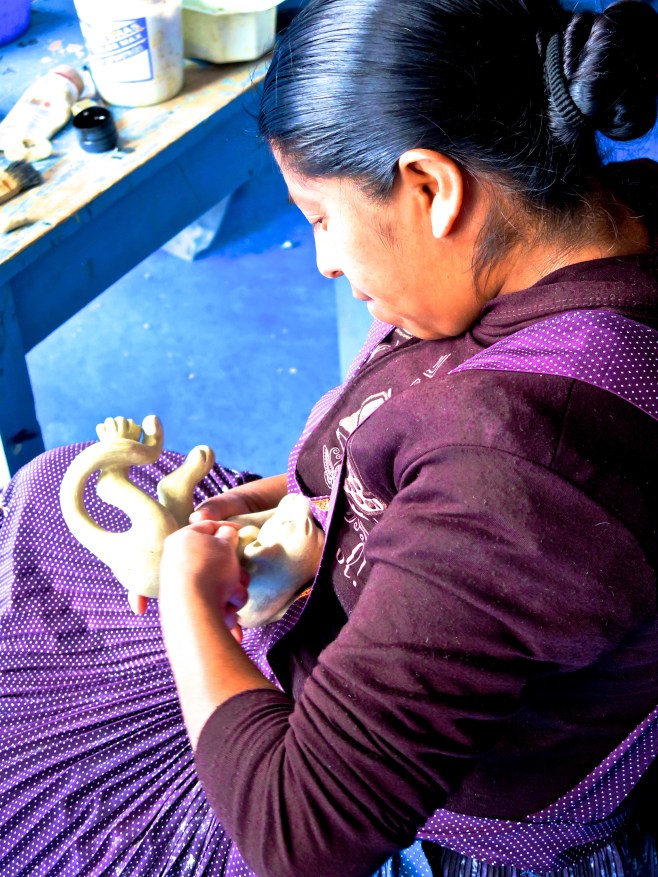
Polishing a ceramic piece in the studio of internationally collected artist Juana Gomez Ramirez whose work is very popular in our area. The indigenous community, Amatenango del Valle, is famous for excellent pottery made using prehispanic methods.
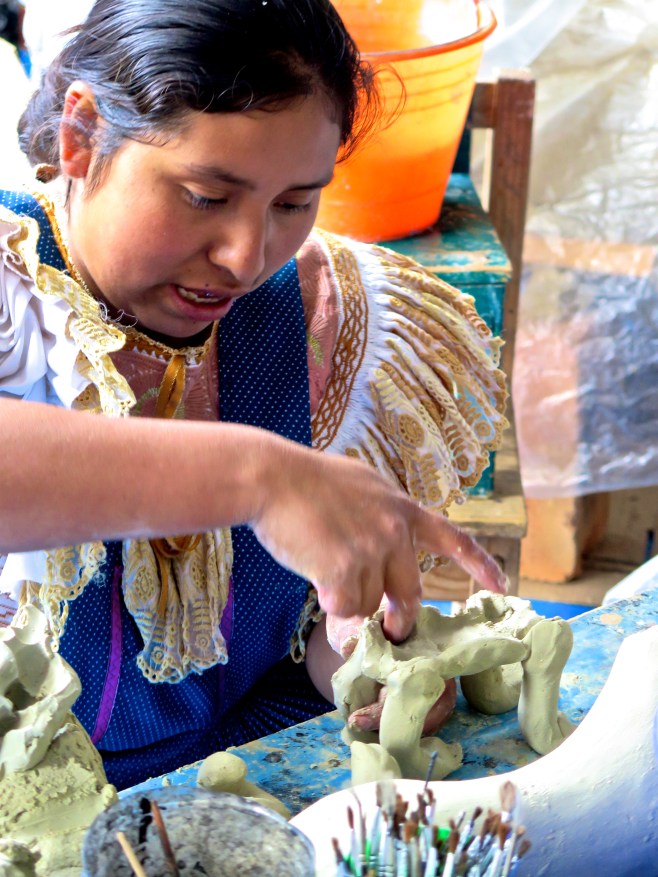

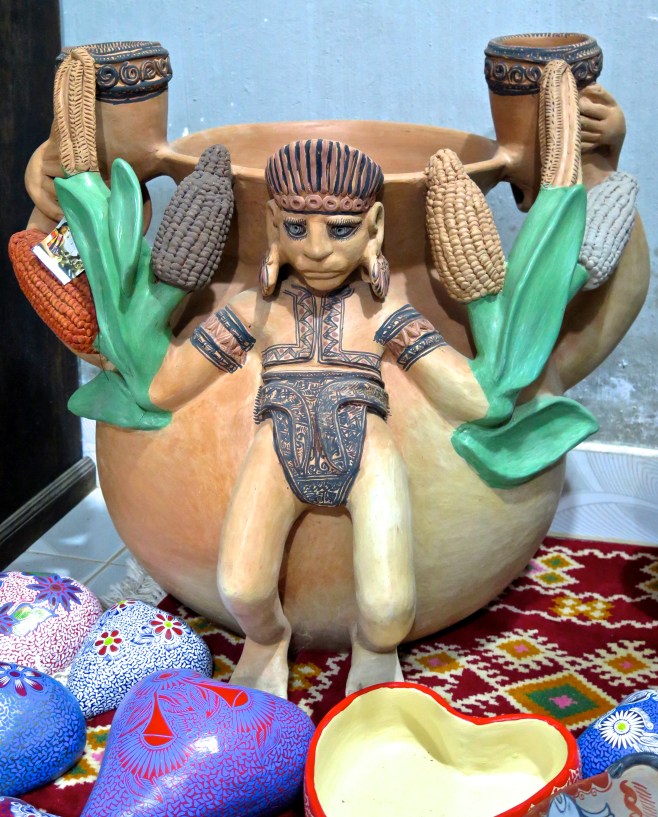
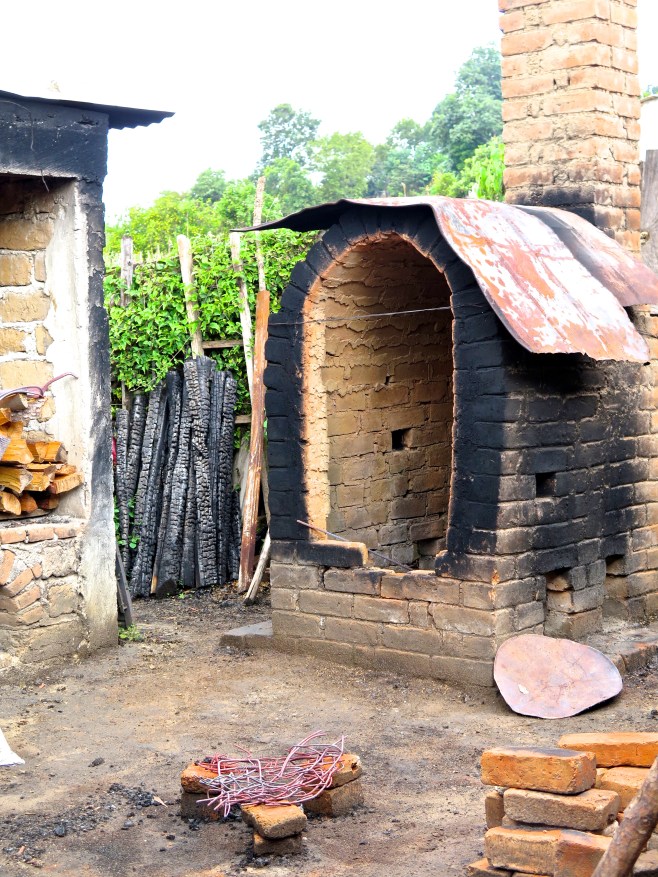
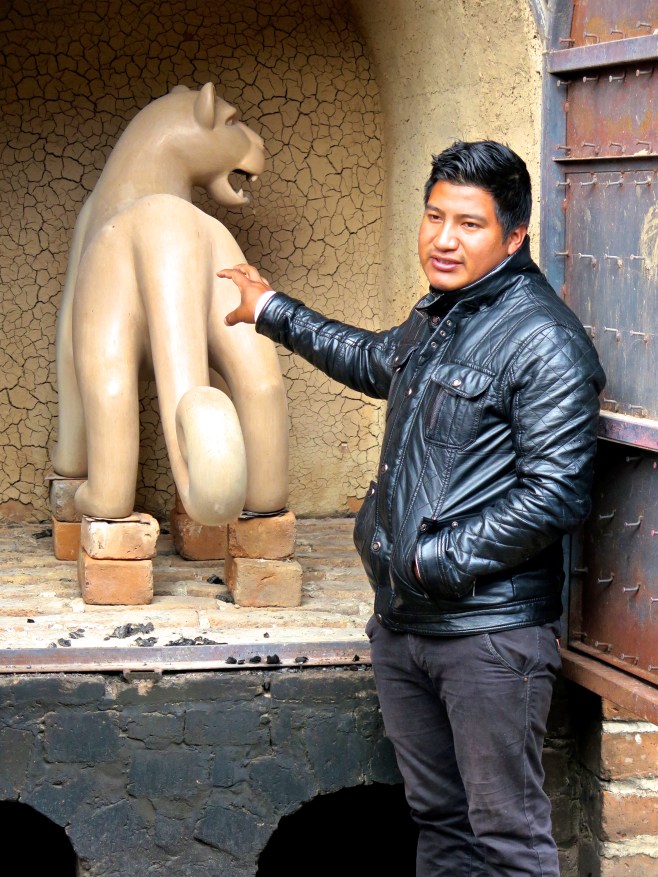
This worker is telling us that controlling temperature variations is very important, especially with large pieces, so they don’t explode duing firing. Not easy in wood-fired kilns.
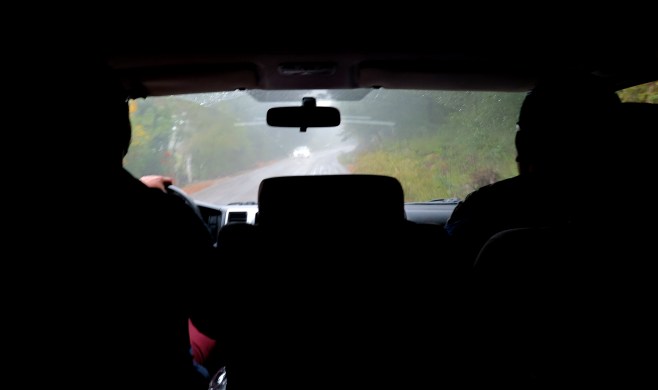
In the tour van speeding for 2 hours on very curvy roads toward some spectacular waterfalls on a foggy and rainy day. Fortunately, our excellent driver, Humberto, has made this trip many times and probably could qualify for Formula 1 racing.
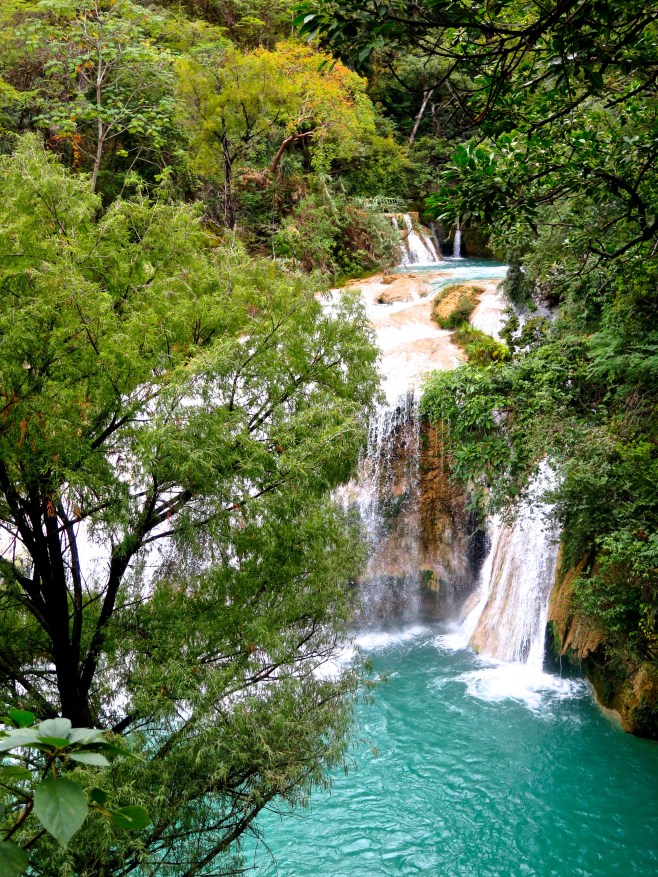
The lowest of 3 beautiful waterfalls at Cascadas El Chiflon where one could take a zipline from the 3rd level. We declined.
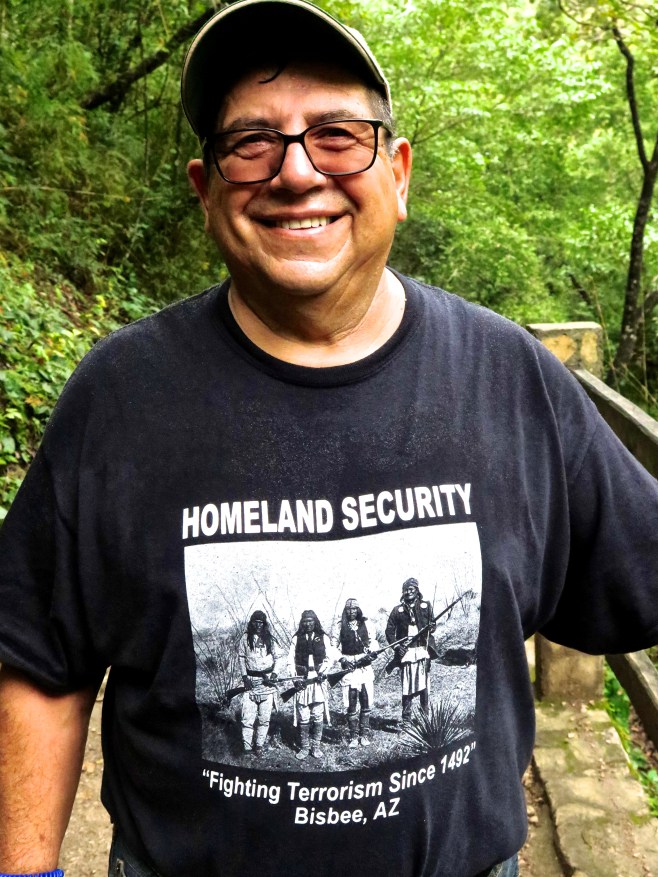
Our tour mate, Rudolfo, a Mexican who recently retired from a job in the U.S. His historically accurate T-shirt reads, “Fighting terrorism since 1492.”
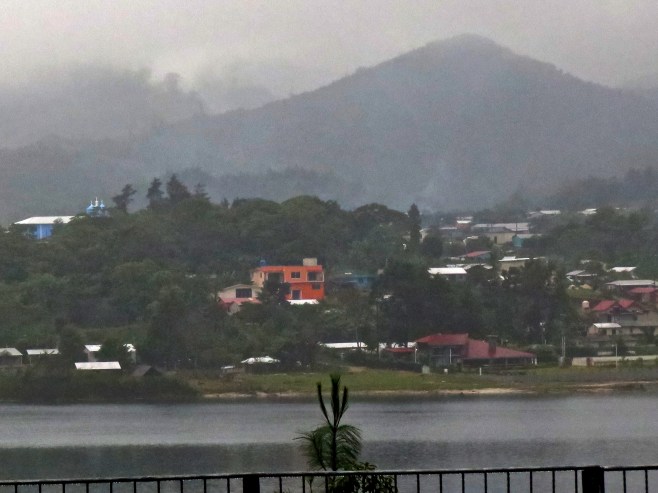
The last stop on that tour brought us to Lagunas de Montebello which boasts 59 beautiful lakes. The mountains are across the border with Guatamala. Unfortunately, it was cold and rainy so we ambled across the road to some very basic stalls that offered a variety of local foods and then made the very long journey back to our hotel.
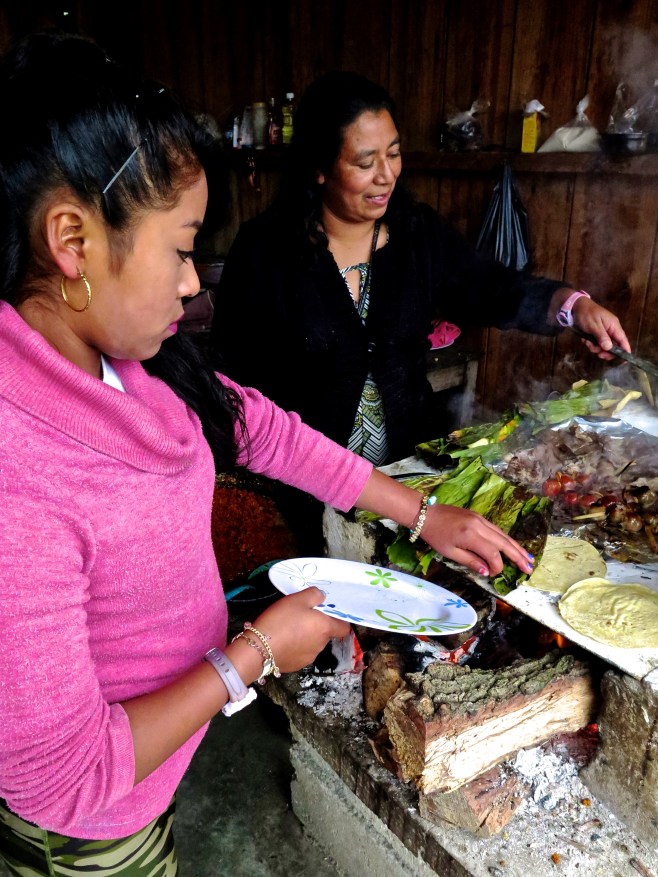
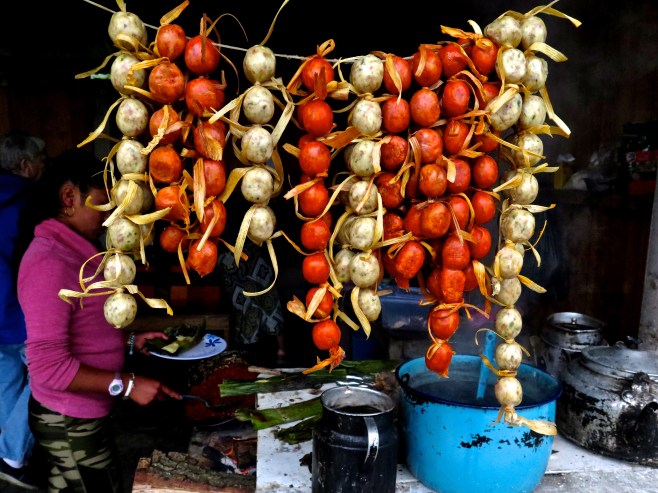
These round, spicy sausages were particularly tasty.
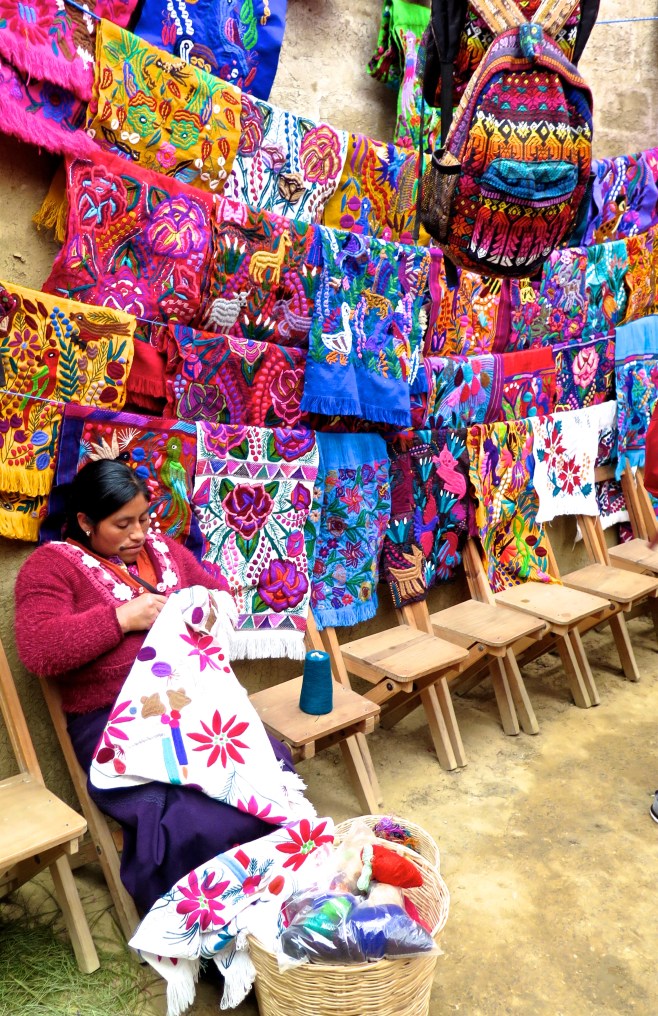
The next day we visited a weaving family in the town of Zincantan where waist looms are still in use. Our guide told us that 10 years ago there were 25 families in this weaving coopertative and now there are only four. The loss of traditional artisans of every kind is unfortunately happening all over Mexico and with them go the ancient techniques that produce so many amazingly beautiful products.
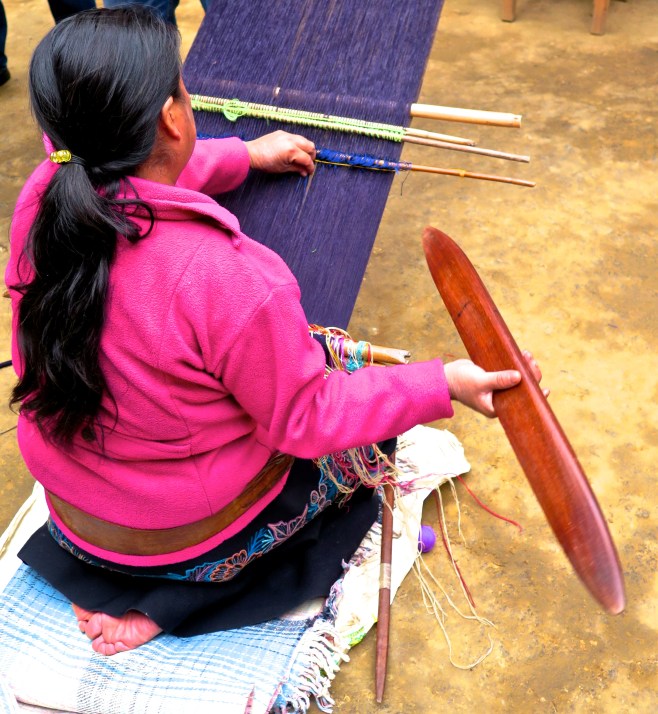
This weaving technique requires a lot of strength and endurance and can be used for only 4 or 5 hours a day.
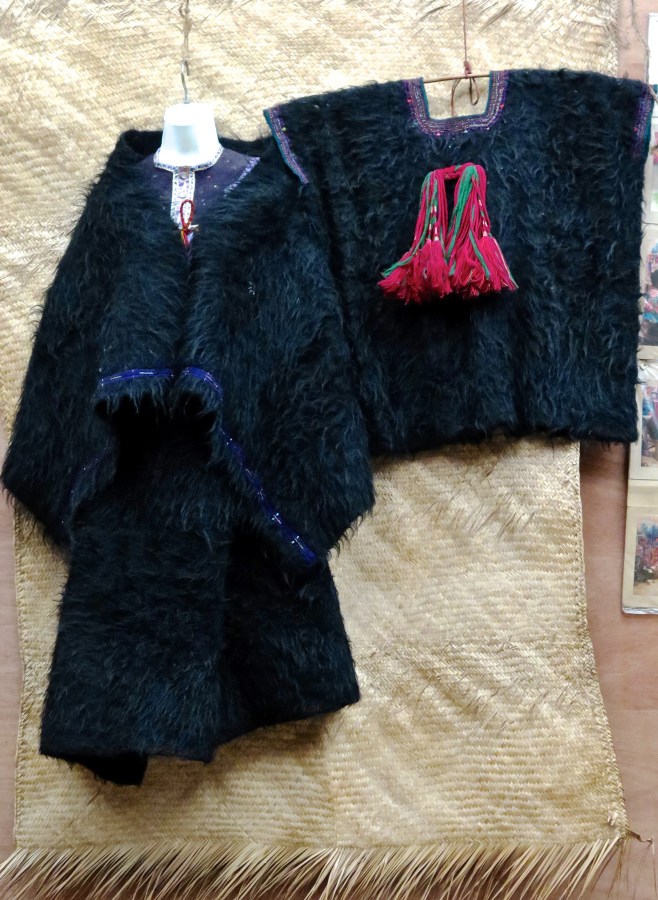
These heavy black wool garments are still worn by both men and women in the towns of Zincantan and San Juan de Chamula, both of which vigorously preserve their ancestral traditions, religious beliefs, and social organization in the face of powerful outside pressures for change.

Our guilde dressed the young woman in the center and her fiance at her left, both from Mexico City, in traditional local wedding attire. The others were dressed as they would be in a traditional wedding.
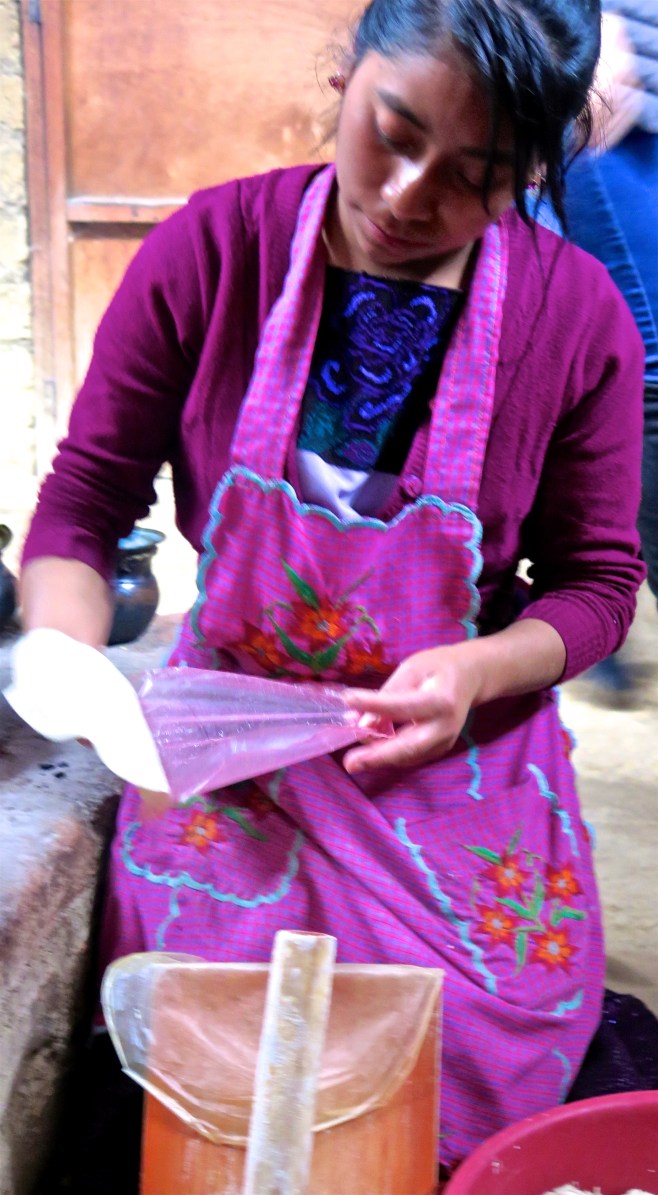
We enjoyed delicious handmade tortillas prepared over a wood fire and a local coffee drink.

A painting celebrating the beauty and variety offered by local weavers.
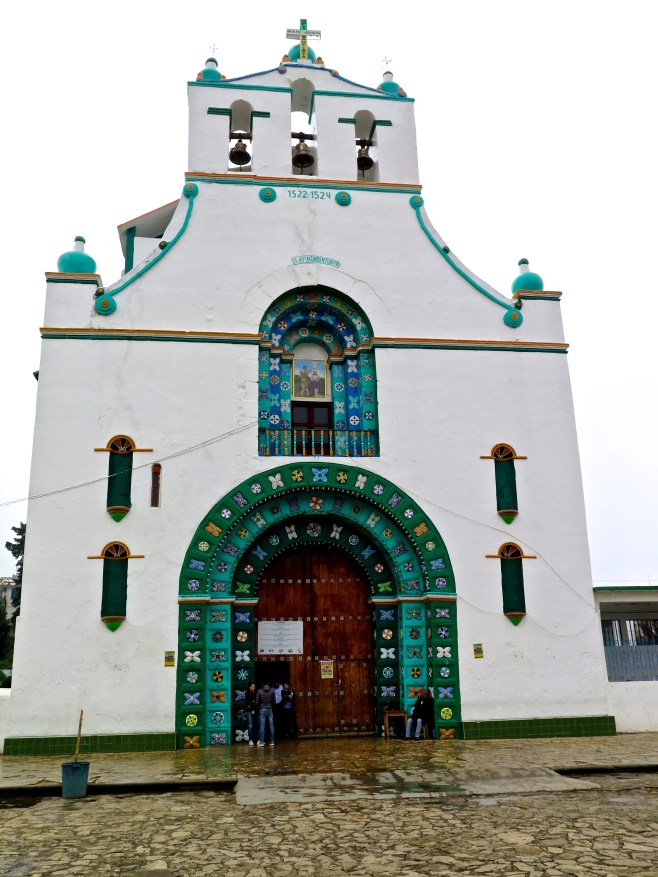
The church in Chamula where the Tzotzil ethnic group practices traditional rituals of healing prayer. No photos are allowed in the church, only outside. The healing rituals we witnessed varied greatly from typical Roman Catholic rites. There were no pews in the church and all rituals were carried out on the floor.
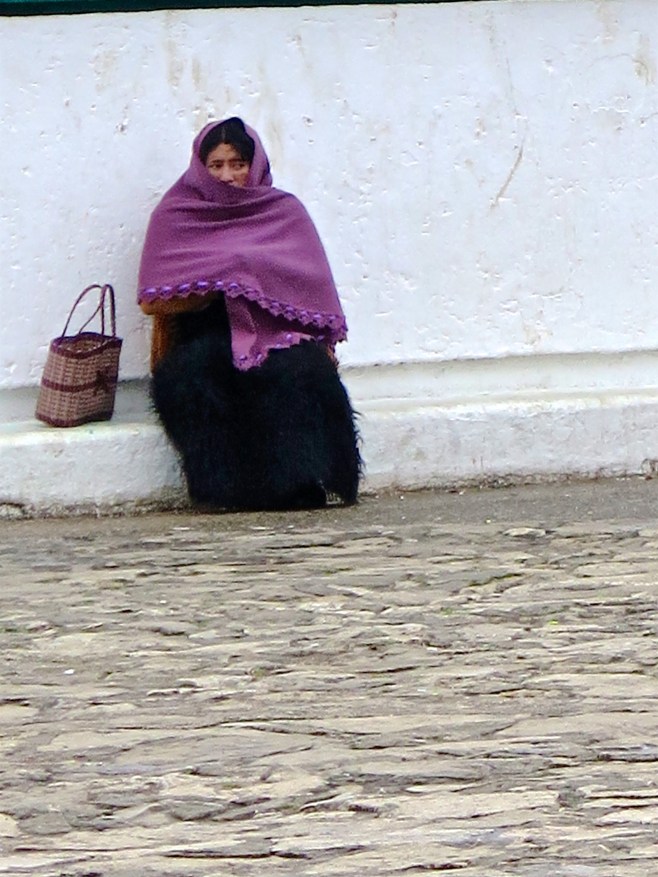
Many of the people entering and leaving the church were dressed in traditional black wool outfits.
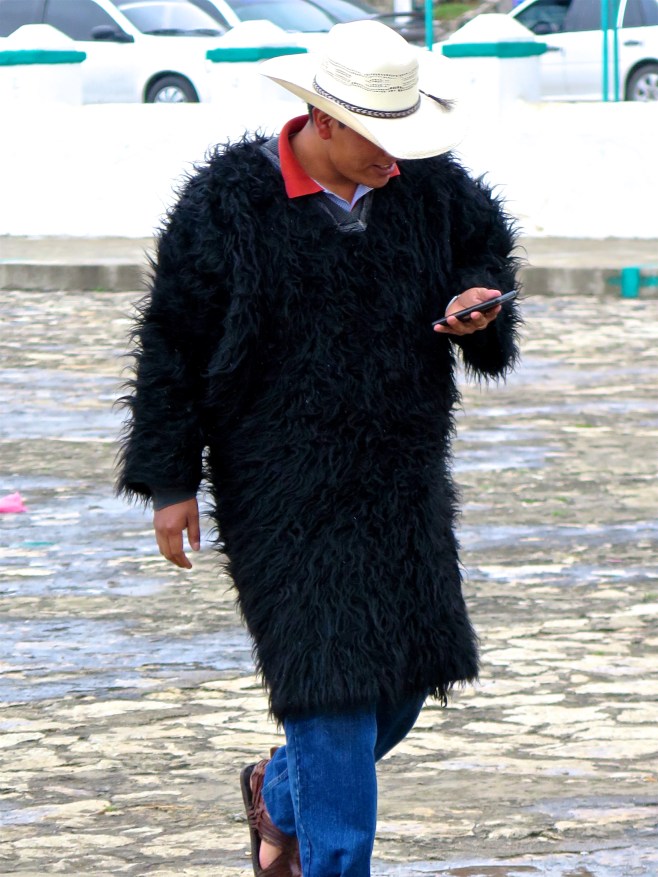
Here we see the blending of the ancient with the contemporary.

On the bus trip from San Cristobal to the archeological site, Palenque, we were often above the clouds that hovered over the valleys below.
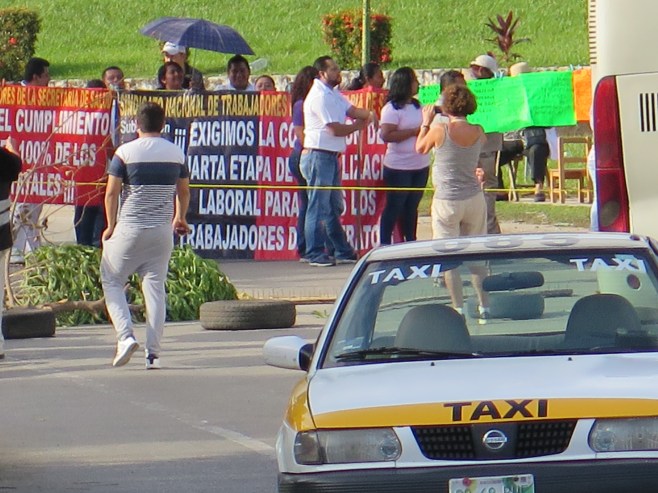
In order to meet our tour van the next morning, we had to pull our suitcases around this blockade of the road between our hotel and the archeological site that was created by doctors and nurses who had not been paid for months, an unfortunate but common occurence for teachers and other public employees in Mexico.
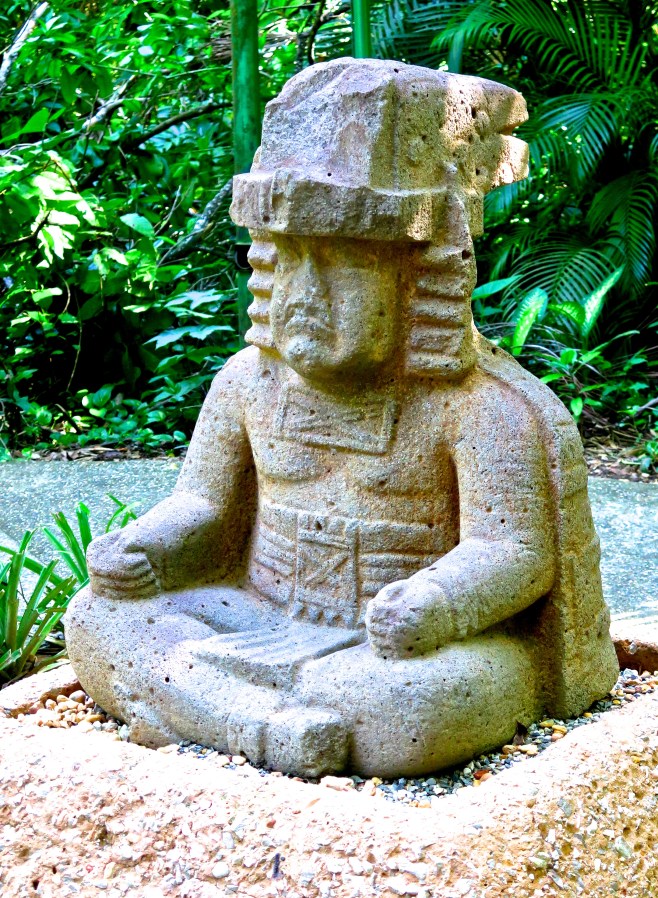
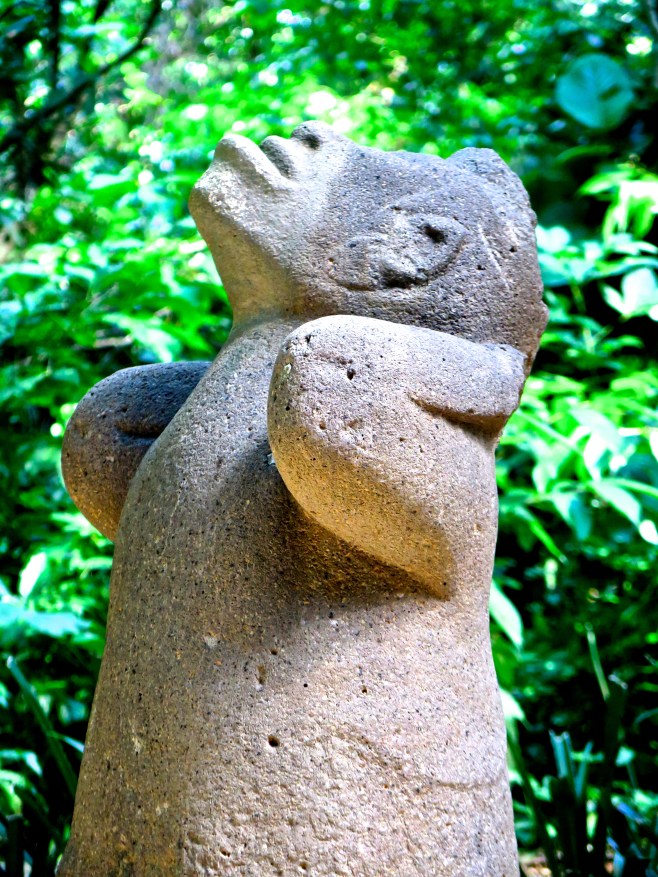
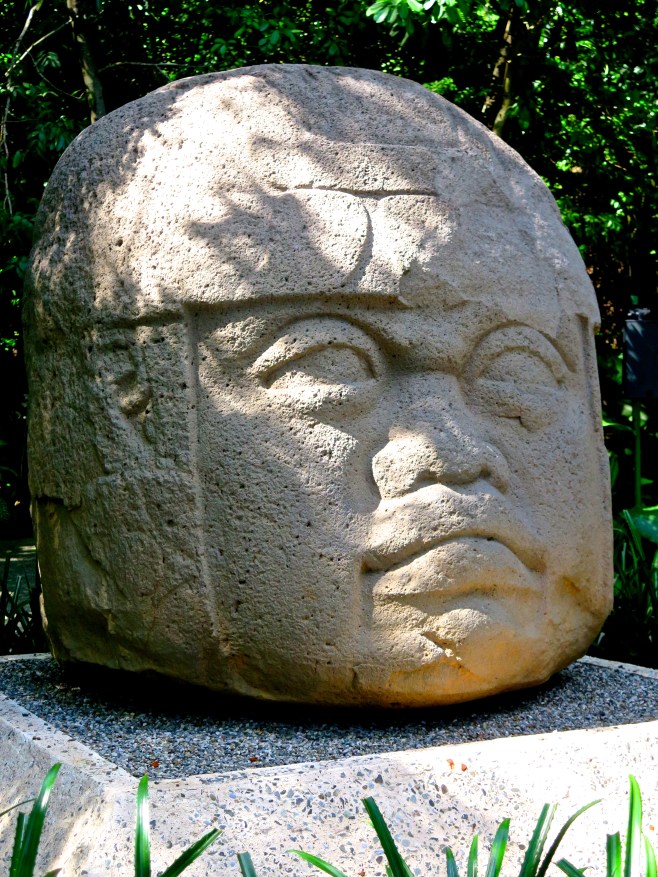
Unfortunately, for a number of reasons, we skipped the trip to Palenque but on the way to the airport in Villahermosa we were taken to an unusual outdoor museum, La Venta, that featured carvings from the Olmec civilization, perhaps the most ancient group in Mexico, and included a zoo with free ranging monkeys and ringtailed coatamundis.
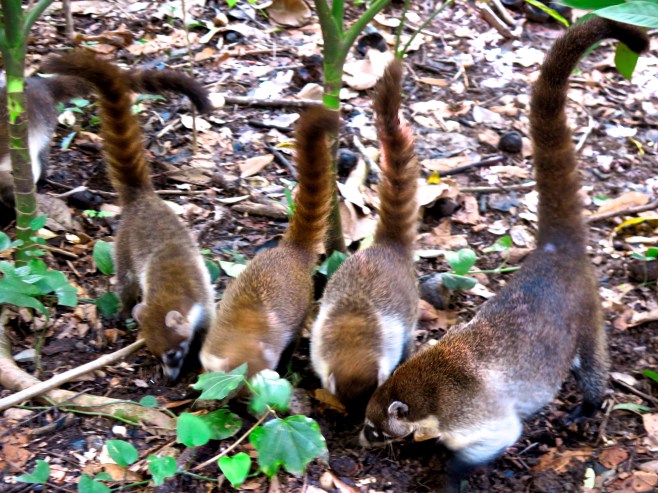
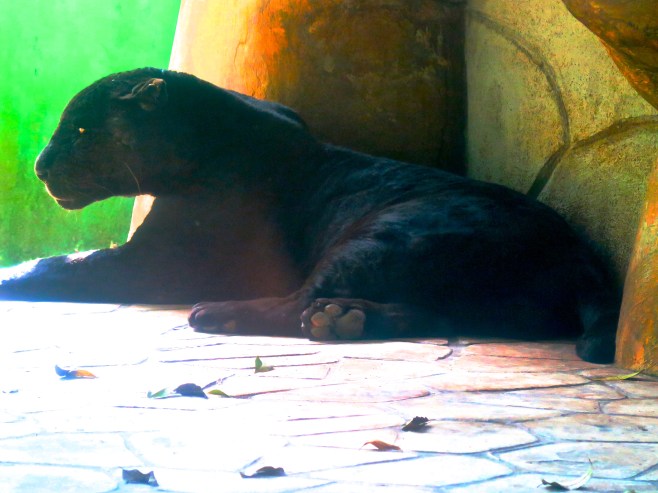
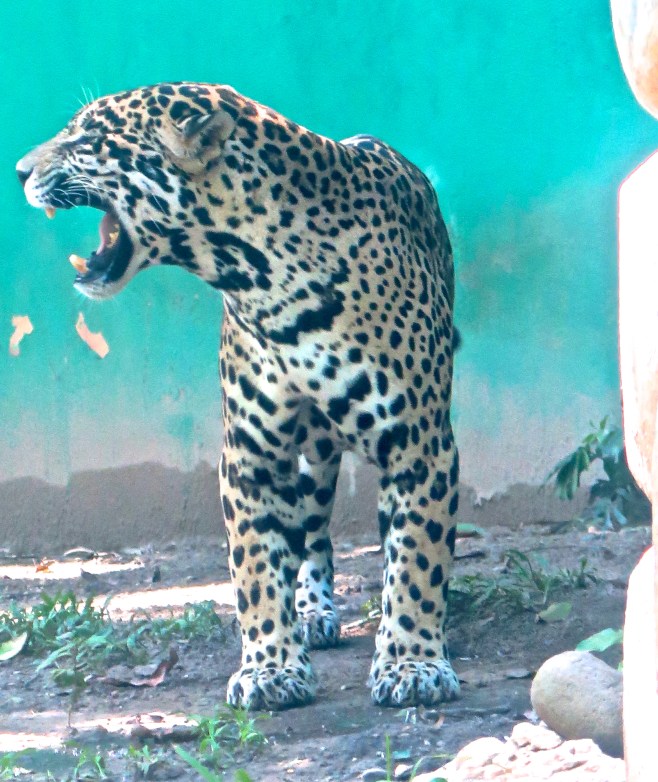
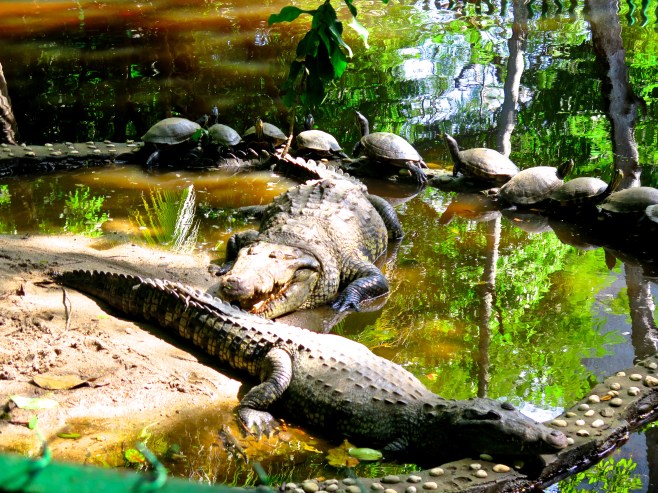
Fortunately, the corcadiles were not on the loose.
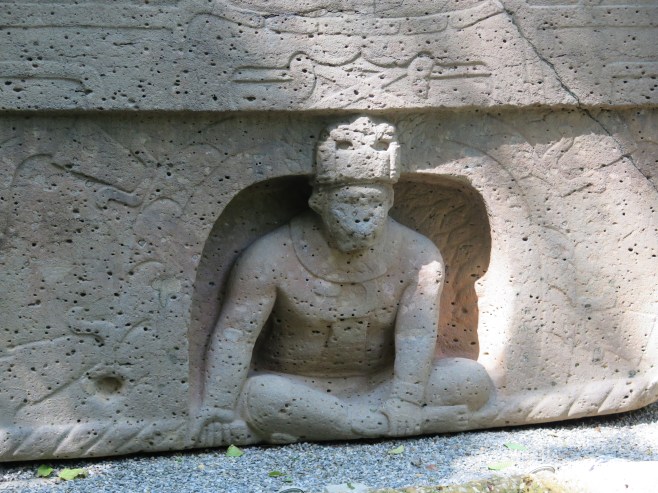
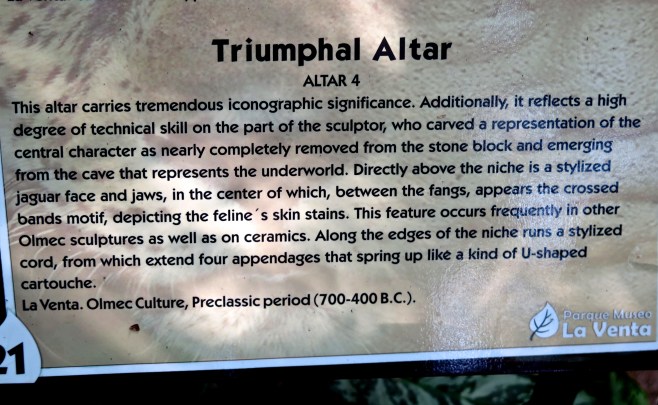
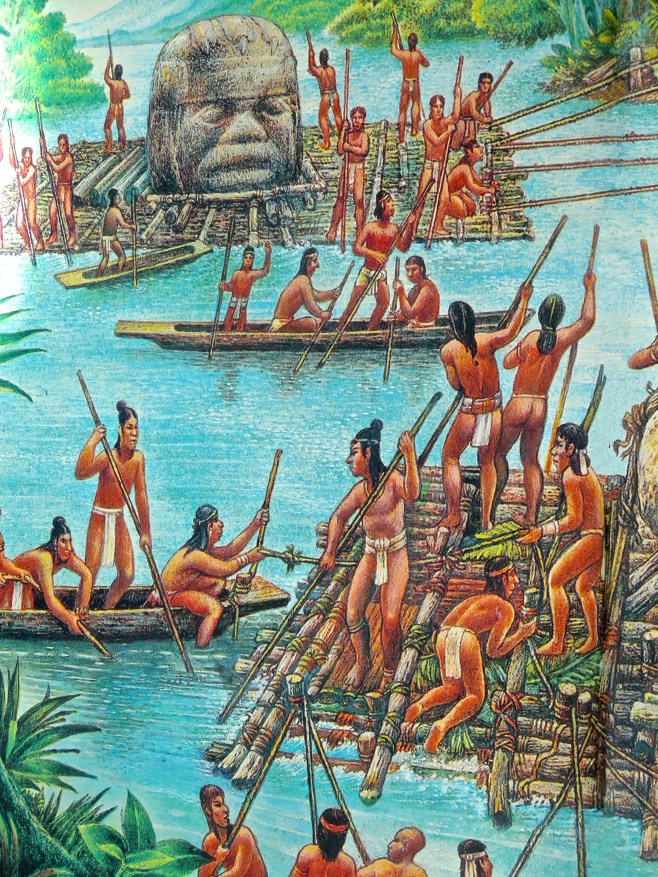
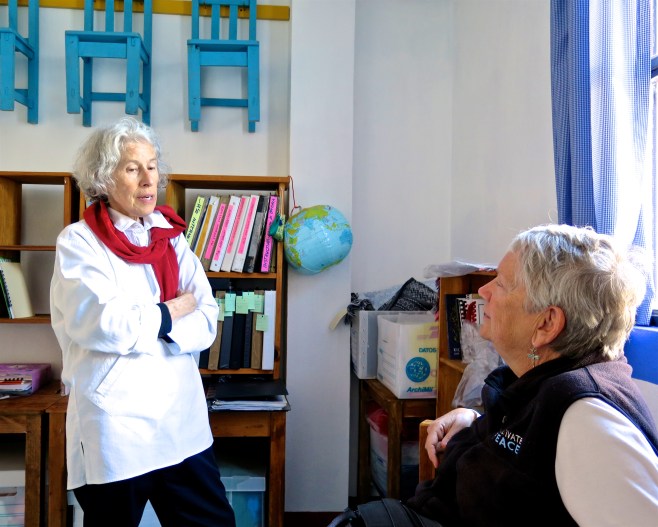
Carlota Duarte explaining to Barbara how and why the Chiapas Photography Project was created and is maintained with donations, grants, and sales of fascinating photographs and photography books.
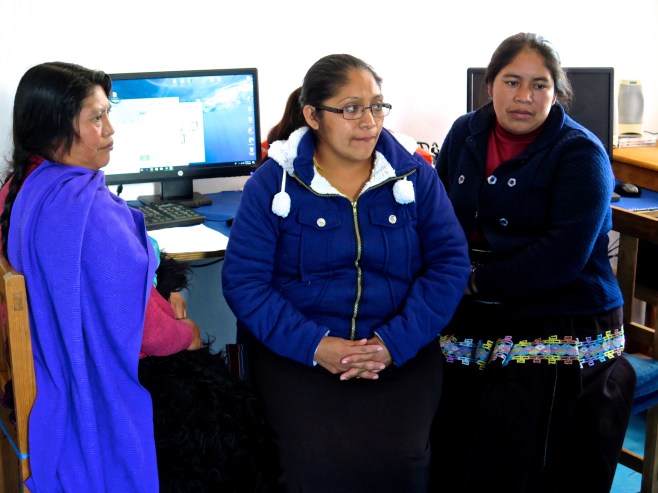
These three women manage the day to day operations of the CPP that are described below. Like many indigenous people, they are not comfortable being photographed, especially by strangers.
The following information is taken from an excellent interview by Richard Pitnick for Black & White Photography Magazine published in June, 2007. By then, Barbara and I were actively searching for a place in Mexico for retirement so I kept the magazine for future reference.
“It was the desire to help indigenous Maya develop a deeper understanding and give voice to their own history, beliefs and values that prompted American born photographer Carlota Duarte to establish the Chiapas Photography Project (CPP) in 1992. Since then, the CPP has instructed over 250 indigenous Maya men and women from 10 different ethinic groups in camera use and, for some of the participants, darkroom technnique; has helped oversee the publication of seven books of photographs documenting diverse aspects of Maya society and culture; and organized numerous individual and group exhibitions in the United States, Europe and Mexico.”
Much more remarkable work has been done since 2007. For current information about how the CPP is helping to preserve the local Maya culture while recording the the impact of changes that are occuring daily, go to their website: https://chiapasphoto.org/artdev/artdev.html
 Mexico & Beyond